Moving beyond basswood: cherry, walnut and the rest
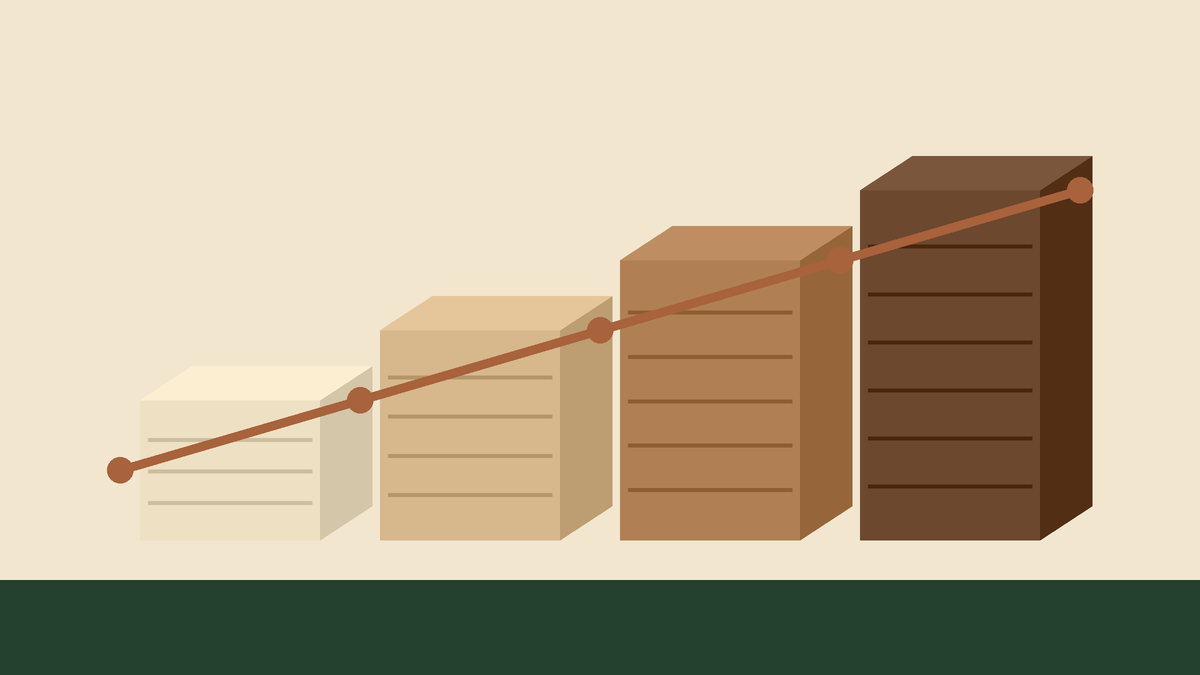
The move away from basswood is usually forced by a project rather than chosen. A spoon that dents, a handle that snaps, a detail that will not hold a crisp edge — each of those points at a denser species, and each brings a set of changes that catch people out.
What changes when density goes up
- Sharpening frequency roughly doubles at each step. A tool that carves basswood for an hour between strops may need attention every fifteen minutes in cherry.
- Cut depth halves. Trying to take a basswood-sized shaving out of walnut stalls the tool and tears the surface.
- Correction gets expensive. In basswood you can pare away a mistake in a few strokes; in maple the same correction is a considered decision.
- Grain becomes more directional. Denser woods punish an uphill cut far more visibly.
The realistic next steps
Butternut is the gentlest move up. It carves nearly as easily as basswood, takes detail better and has actual figure, which basswood entirely lacks. It is the standard recommendation for a first non-basswood piece and is worth seeking out.
Cherry is the workhorse for functional pieces. It is about twice as dense as basswood, holds a crisp edge, darkens beautifully with age and remains tractable with hand tools. Most kitchen spoons and small boxes end up in cherry for good reason.
Black walnut carves better than its hardness suggests, because its pores are open and its fibres shear cleanly. It is the usual choice when appearance matters most. Expect to strop constantly and to accept that a slip shows permanently against the dark surface.
Hard maple is where most hand carvers stop. It holds the finest detail of the common species and is genuinely hard work — a project that takes an evening in basswood takes a weekend in maple, and every tool needs to be at its best throughout.
Two woods worth avoiding early
Oak. Its wide rays and hard latewood tear in unpredictable directions, and it dulls edges quickly for very little visual reward at small scale.
Most tropical hardwoods sold as offcuts. They are often very dense, frequently interlocked, and hard on tools in ways that discourage rather than teach.
Adjusting your technique
Two changes carry most of the adaptation. First, skew every cut — presenting the edge at an angle rather than square lowers the effective cutting resistance substantially, and it matters more the harder the wood gets.
Second, work in more, lighter passes and let the tool do it. Forcing a deep cut in a dense wood is how gouge edges chip and how a piece splits along the grain. A shaving half as thick, taken twice, gets there faster in practice because nothing has to be repaired.
Sharpening changes too
A bevel angle that works in basswood may be too fine for maple. Edges ground at around twenty degrees hold up well in soft wood and fold over in hard; taking the angle to twenty-five degrees costs a little keenness and buys a great deal of durability.
Many carvers keep two knives for this reason — one ground fine for soft wood and detail, one ground stouter for dense species — rather than re-grinding a single tool back and forth.